
Some links may be affiliate links, which means I may earn a small commission if you purchase through them, at no additional cost to you. I only share pieces I would genuinely consider for a warm, elevated, well-planned home.
Most homeowners think beautiful living rooms come from buying beautiful furniture. In reality, beautiful living rooms come from making better decisions.
After working through countless room layouts and studying hundreds of professionally designed spaces, I've noticed something consistent: designers rarely start with trends or accessories. They begin by building a strong foundation.
When that foundation is right, almost everything else becomes easier. The room feels balanced, comfortable, and cohesive before the styling even begins.
If you're furnishing a new home or refreshing your current one, these are the seven pieces I recommend prioritizing first.
1. A Rug That Actually Fits the Room
The rug is the foundation of the seating area. Unfortunately, it's also one of the most common mistakes homeowners make.
A rug that's too small makes every piece of furniture feel disconnected. The room instantly feels unfinished, even if everything else is beautiful.
Instead:
Front legs of every seat should sit on the rug.
When possible, choose the largest rug your space comfortably allows.
Think of the rug as connecting the conversation area, not decorating the floor.
This one decision can make an average room feel professionally designed.
Shop my favorite rugs:

2. A Sofa That Fits the Space
Bigger isn't always better. Neither is smaller.
The best sofa is one that's proportional to the room and leaves comfortable walking paths around it.
I always encourage clients to think about movement before aesthetics.
A beautiful sofa that blocks circulation will never feel luxurious.
Shop my favorite sofas:
3. One Statement Coffee Table
Every room needs something that quietly anchors the center. A coffee table does more than hold drinks.
It creates visual weight.
Natural oak.
Travertine.
Limestone.
Rounded edges.
Organic forms.
These materials instantly create warmth without overwhelming the room.
Shop my favorite coffee table and decor:

4. Lighting at Multiple Heights
Professional rooms never rely on one overhead light.
Instead they combine:
Floor lamps
Table lamps
Sconces
Ambient lighting
Layered lighting creates warmth while reducing harsh shadows.
This is one of the fastest ways to make a home feel expensive.
Shop my favorite lamps:
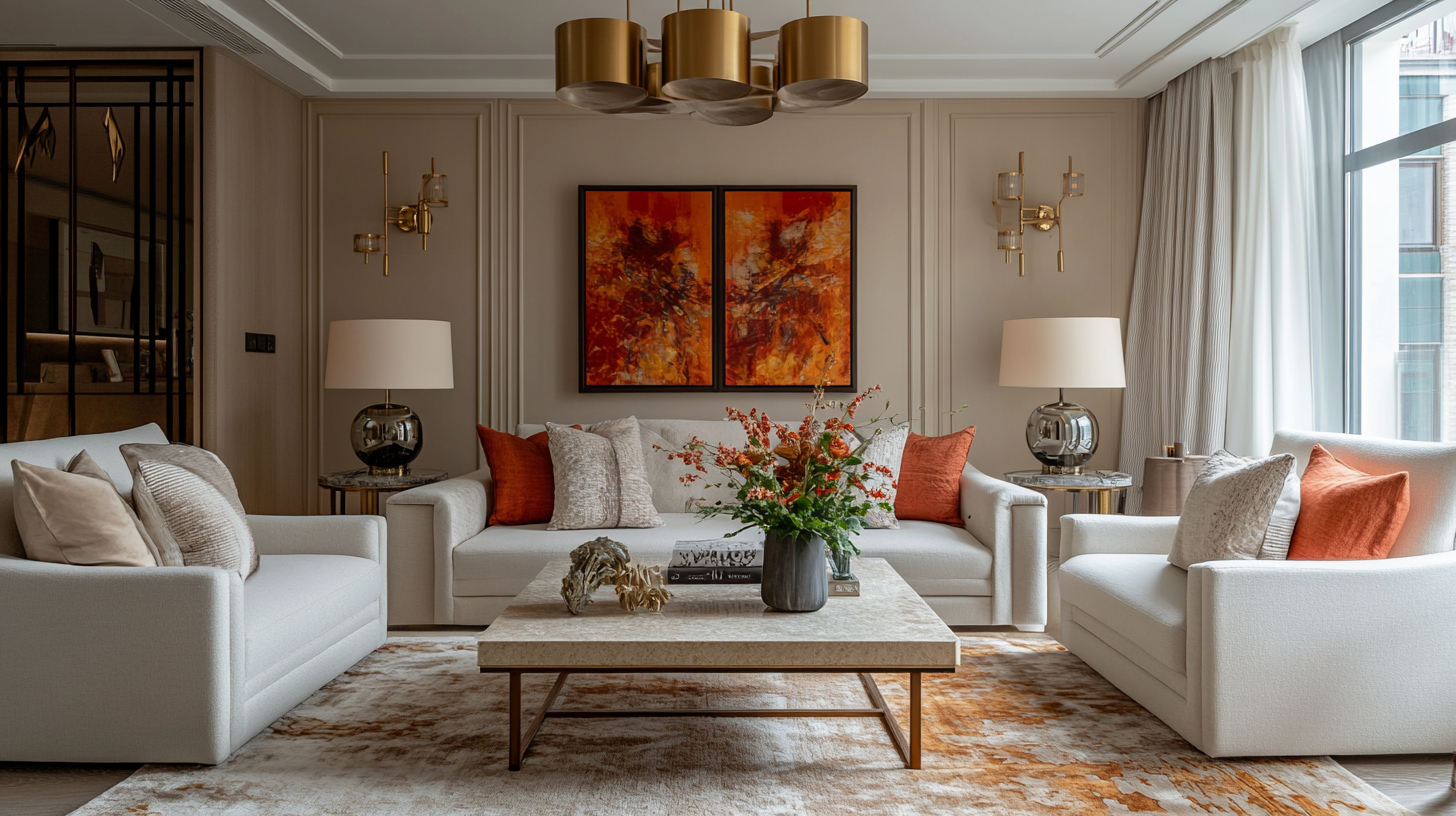
5. Window Treatments That Reach the Floor
Curtains should almost always be mounted higher and wider than the window itself.
This simple adjustment makes ceilings feel taller and windows feel larger.
Choose linen or linen-look fabrics in warm neutral tones for a timeless look.
Shop my favorite window treatment pairing:
6. Texture Before Color
Many homeowners try to make a room interesting by adding more colors.
Designers usually do the opposite.
Instead of adding another color, add another texture.
Bouclé.
Linen.
Leather.
Oak.
Stone.
Travertine.
These layers create warmth while keeping the palette restrained.
Shop my favorite decor items:

7. Decor That Has Room to Breathe
The final layer should never be the first purchase.
Accessories work because they support the room—not because they fill empty space.
Leave negative space.
Group items in odd numbers.
Mix heights.
Mix textures.
Less almost always feels more expensive.
Final Thoughts
A calm, cohesive living room isn't created by buying more. It's created by making better decisions in the right order.
When you focus on scale, layout, texture, and proportion first, decorating becomes much easier—and often less expensive.
If you're feeling overwhelmed, start with these seven foundational pieces. Build the room one thoughtful decision at a time.
FAQ
What is the most important piece of furniture in a living room?
A properly sized sofa and rug create the foundation for the entire room. When these are proportional to the space, everything else feels more cohesive.
Should I decorate before buying furniture?
No. Start with layout, furniture size, and circulation. Accessories should be the final layer.
How do I make my living room look more expensive?
Focus on proportion, layered lighting, natural materials, and texture rather than adding more decor.
One last thing.
If you're planning a living room and want to avoid expensive layout mistakes, download my free Living Room Reset Guide for a step-by-step framework before you buy anything.
Or, if you'd like personalized guidance, learn more about my Design Clarity Call, where I'll create a layout and furnishing plan tailored to your home.
