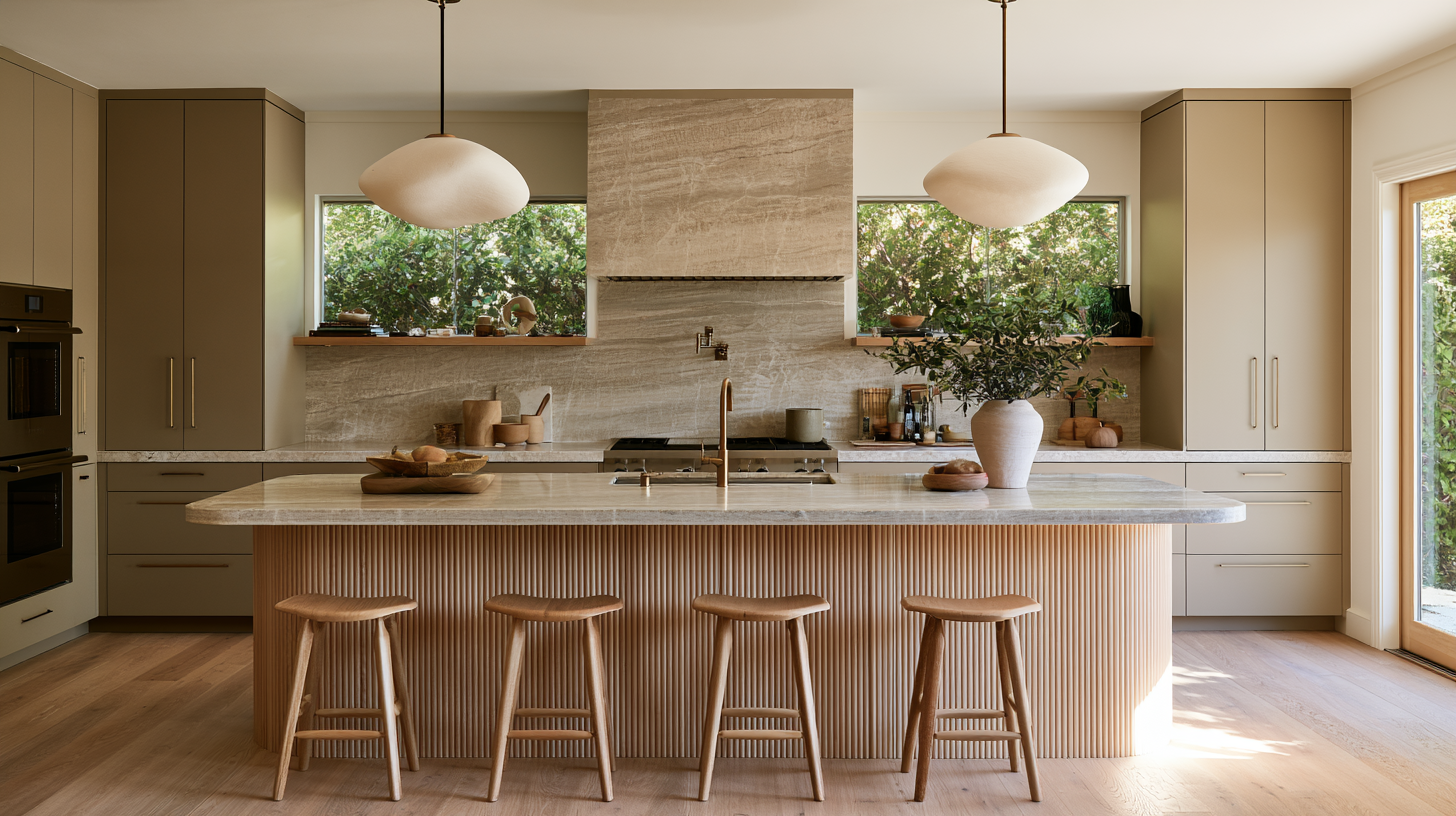
A builder-grade kitchen can be perfectly functional and still feel generic.
The problem is not always the layout. More often, it is the lack of material hierarchy, visual warmth and intentional detail.
Builder-grade finishes are typically selected to appeal to the widest possible audience. White cabinets, simple hardware, basic countertops and standard lighting make the kitchen easy to sell—but they rarely give it a distinct point of view.
That does not mean you need to move walls or completely rebuild the space.
Before beginning a major kitchen renovation, evaluate the elements that are already working. If the circulation feels comfortable, the appliances are positioned well and the kitchen provides enough storage, keeping the existing layout can save a significant amount of time, money and disruption.
The most effective builder-grade kitchen upgrades often come from improving the relationships between the materials rather than increasing the number of changes.
Here is how to make a builder-grade kitchen feel custom without changing the layout.
1. Keep a Functional Kitchen Layout
Moving plumbing, electrical connections, gas lines, walls or major appliances can quickly increase the cost and complexity of a kitchen renovation.
In some homes, those changes are necessary. A poorly planned kitchen may have inadequate storage, limited preparation space or traffic patterns that regularly interfere with cooking.
But many builder-grade kitchens already have a functional foundation.
Keep the existing layout when:
The refrigerator, sink and cooking area are easy to move between.
The island has comfortable clearance on all sides.
Cabinet and drawer storage is sufficient.
Appliance doors can open without blocking major walkways.
People can pass through the kitchen without interrupting the primary work zone.
The island is appropriately proportioned for the room.
There are no major structural or circulation problems.
If these conditions are met, changing the layout may not provide enough value to justify the additional expense.
Instead, treat the existing kitchen as a framework. Keep the parts that are functioning well and direct the renovation budget toward the finishes people see and interact with every day.
This approach can include replacing cabinet fronts, installing new countertops, updating the backsplash, changing the hardware and improving the lighting—all while leaving the cabinet footprint and appliance locations intact.
When should you change the layout?
A layout change may be worth considering when the kitchen has:
A major traffic path running through the cooking zone
Insufficient countertop space
An oversized or undersized island
Appliances placed too closely together
Poor access to the pantry or refrigerator
Limited storage that cannot be improved internally
A wall that unnecessarily separates the kitchen from an adjacent space
The goal is not to preserve the layout at all costs. It is to avoid demolition simply because the kitchen does not currently feel custom.
Function and appearance should be evaluated separately before deciding what needs to change.

2. Choose One Hero Material
A custom kitchen usually has a clear visual hierarchy.
One material leads the design. The remaining finishes support it.
In a builder-grade kitchen renovation, the countertop and backsplash are often the strongest places to introduce this hero material.
Natural stones such as Cristallo quartzite or Taj Mahal quartzite can establish the color direction, movement and overall mood of the kitchen.
Cristallo quartzite
Cristallo typically has a luminous appearance with layers of white, cream, gray and subtle warm veining. Some slabs can feel especially dramatic because of their translucency and crystalline movement.
It works well when you want the kitchen to feel light, elevated and visually distinctive.
Because Cristallo has noticeable movement, the surrounding finishes should remain relatively restrained. Simple cabinet fronts, quiet flooring and understated hardware allow the stone to remain the focal point.
Taj Mahal quartzite
Taj Mahal quartzite is often selected for warm, organic interiors because of its creamy base and soft beige, taupe and gold movement.
It can bridge several common kitchen finishes, including:
Warm white cabinetry
Mushroom or taupe-painted cabinetry
Natural white oak
Medium brown wood tones
Aged or unlacquered brass
Soft bronze finishes
Taj Mahal can be especially effective in a builder-grade kitchen because it adds warmth and depth without making the room feel overly dramatic.
Let the stone determine the undertones
Once you select the hero material, examine the undertones carefully.
A warm quartzite may look disconnected next to a stark blue-white cabinet color. A cooler stone may feel unbalanced beside yellow-toned wood. Even individually beautiful materials can compete when their undertones are not compatible.
Use the countertop to guide decisions about:
Cabinet color
Wood tone
Backsplash
Wall paint
Hardware
Lighting finishes
Upholstery or counter stools
For a more continuous, custom appearance, consider using the same stone on the countertops and backsplash.
A full-height slab backsplash reduces visual breaks and allows the natural movement of the stone to become an architectural feature. It can also make a standard cabinet layout feel more intentional.
The objective is not to select the most expensive material. It is to select one material with enough visual presence to organize the rest of the palette.


4. Use Metal as a Supporting Finish
Hardware is often treated as the final decorative decision, but it has a meaningful effect on how the entire material palette reads.
The best metal finish should support the stone and cabinetry rather than compete with them.
Unlacquered brass
Unlacquered brass is a living finish. It develops a natural patina as it is exposed to air, moisture and touch.
This variation is part of its character, but it is not the right choice for everyone. Homeowners who prefer every pull and knob to remain identical may be happier with a sealed or plated finish.
Unlacquered brass works particularly well with warm stone, creamy paint and natural wood.
Aged brass
Aged brass offers a softer, more established appearance from the beginning. It can provide warmth without the brightness of polished brass.
It is a useful option when you want the kitchen to feel collected, traditional or quietly luxurious.
Bronze
Bronze introduces depth and contrast.
It works well in kitchens with:
Medium or dark wood tones
Cream or mushroom cabinetry
Strong stone movement
Black window frames
Dark lighting fixtures
Bronze can feel softer than matte black while still grounding a light palette.
Keep the metal palette controlled
A kitchen does not need every metal finish to match exactly, but the combinations should feel intentional.
For example, aged brass cabinet hardware can work with dark bronze lighting when both finishes have warm undertones. A stainless-steel range can remain even when the decorative metals are brass or bronze.
Avoid adding several competing statement finishes. The stone, cabinetry and lighting should not all demand equal attention.
A custom kitchen feels layered, but it also feels edited.

5. Improve the Lighting
Lighting is one of the most commonly overlooked builder-grade kitchen upgrades.
A kitchen can have beautiful cabinetry and stone but still feel flat when it relies on a single layer of bright recessed lighting.
A more considered lighting plan improves both the function and atmosphere of the room.
Replace generic pendant lights
Builder-installed pendants are often too small for the island or selected without considering the style of the surrounding materials.
When replacing them, evaluate:
The length and width of the island
The number of fixtures
The visual weight of each fixture
The ceiling height
The distance between the pendants
The sightlines into adjacent rooms
A larger island does not always need more pendants. Two appropriately scaled fixtures can look more intentional than three undersized ones.
The fixture should relate to the island as a whole rather than being selected based only on its appearance in a product image.
Add layered lighting
A well-designed kitchen generally uses multiple light sources.
These may include:
Recessed ceiling lights
Island pendants
Under-cabinet lighting
Interior cabinet lighting
Sconces near open shelving
A decorative fixture over a breakfast nook
Each layer has a different purpose.
Recessed lights provide overall illumination. Under-cabinet lights improve task visibility. Pendants create visual structure and add warmth closer to eye level.
Layering these sources makes the kitchen feel more dimensional.
Choose a warm, consistent light temperature
Inconsistent lighting temperatures can make cabinet and countertop colors look different across the room.
Warm, coordinated lighting generally complements oak, cream, mushroom, brass and warm quartzite more successfully than harsh, blue-toned light.
Dimmers are also valuable. They allow the kitchen to function as a bright workspace during food preparation and a softer gathering space in the evening.
Lighting should not be treated as an accessory added after the material selections. It influences how every finish is perceived.

6. Decide What to Keep, Replace or Upgrade Later
Not every builder-grade kitchen needs to be renovated at once.
A phased plan can create a more cohesive result than making several disconnected updates based on what feels most urgent in the moment.
Keep
Consider keeping:
A functional kitchen layout
Structurally sound cabinet boxes
Appliances that are in good condition
Flooring that works with the new material palette
Existing plumbing and electrical locations
Practical internal storage components
Keeping these elements preserves more of the budget for visually significant improvements.
Replace first
Prioritize the features that establish the design direction:
Countertops and backsplash
Cabinet fronts or cabinet color
Hardware
Pendant lighting
Faucet and plumbing fixtures
These changes affect the largest visual surfaces and help define the overall palette.
Upgrade later
Once the core materials are established, consider adding:
Under-cabinet lighting
Decorative sconces
Counter stools
Window treatments
Art or framed textiles
Rugs or runners
Open-shelf styling
Interior drawer organizers
Appliance panels
Custom hood details
Styling should reinforce the architecture and material palette, not compensate for an unclear design direction.
A few larger, well-scaled pieces will usually feel more elevated than several small decorative objects spread across every countertop.
A Simple Builder-Grade Kitchen Upgrade Formula
When the layout already works, use this sequence:
Keep the functional footprint.
Avoid moving walls, plumbing or appliances unless there is a clear functional reason.
Select one hero material.
Let a distinctive quartzite, marble, tile or wood finish establish the palette.
Add warmth through cabinetry.
Use natural oak, fluted wood or a warm mushroom paint color to balance white surfaces.
Choose a supporting metal.
Select brass or bronze based on the undertones of the stone and cabinetry.
Improve the lighting.
Use appropriately scaled fixtures and multiple layers of warm light.
Finish with restrained styling.
Add pieces that reinforce the design instead of filling every available surface.

Frequently Asked Questions
Can you make a builder-grade kitchen look custom without replacing the cabinets?
Yes. If the cabinet boxes are in good condition, replacing the doors and drawer fronts can significantly change the appearance of the kitchen. New hardware, end panels, countertops, lighting and a full-height backsplash can further elevate the existing cabinetry.
What is the best upgrade for a builder-grade kitchen?
The best upgrade depends on what is currently making the kitchen feel generic. In many kitchens, the most transformative changes are the countertops, cabinet fronts and lighting because they affect the largest and most visible surfaces.
Should I paint builder-grade cabinets or replace them?
Paint may be appropriate when the doors are in good condition and the cabinet style works with the intended design. Replacement fronts may be the better option when the existing doors have dated profiles, visible damage or a low-quality finish.
How can I add warmth to an all-white kitchen?
Introduce warm wood, mushroom-painted cabinetry, creamy natural stone, aged metal and layered lighting. Warmth can also come from counter stools, woven shades, art and restrained styling, but the permanent materials should establish the main direction.
Is quartzite practical for a kitchen?
Quartzite is frequently selected for kitchens because of its natural beauty and durability. However, the exact performance can vary by slab and stone type. Confirm the material classification, sealing requirements and maintenance recommendations with the fabricator and stone supplier before purchase.

Final Thoughts
A custom-looking kitchen is not defined by how many elements were removed or how much construction was completed.
It is the result of hierarchy, proportion and thoughtful material relationships.
When the layout already functions well, preserving it can create room in the budget for the details that have the greatest visual impact: a beautiful hero stone, warmer cabinetry, well-scaled lighting and a controlled metal palette.
Before changing the footprint, identify what is actually making the kitchen feel generic.
The solution may not be more demolition.
It may simply be a more intentional design plan.
Need Help Choosing the Right Kitchen Materials?
If you are deciding between cabinet colors, countertop materials, hardware or lighting—and want to make sure the selections work together—book a Design Clarity Call.
During the session, we can review your existing kitchen, identify what is worth keeping and create a clearer direction for the materials and upgrades that will have the greatest impact.
You can also download the Builder-Grade Kitchen Pairings Guide, featuring curated combinations for cabinetry, countertops, hardware and lighting.
