Some links may be affiliate links, which means I may earn a small commission if you purchase through them, at no additional cost to you. I only share pieces I would genuinely consider for a warm, elevated, well-planned home.

There is a reason certain showroom spaces instantly feel expensive.
It is not just the price of the furniture. It is not just the brand. And it is definitely not because every single piece in the room is dramatic or highly styled.
After spending an afternoon looking closely at the room vignettes at Arhaus, I noticed the same design formula showing up again and again.
Every elevated room had three things:
An organic-textured anchor
A soft contrast layer
A dark grounding accent
That is the formula.
Once you see it, you start noticing it everywhere; in high-end showrooms, designer portfolios, editorial home tours, and beautifully styled living rooms on Pinterest. The best part is that you do not need an Arhaus budget to use it. You just need to understand what each part does.
1. Start With an Organic-Textured Anchor
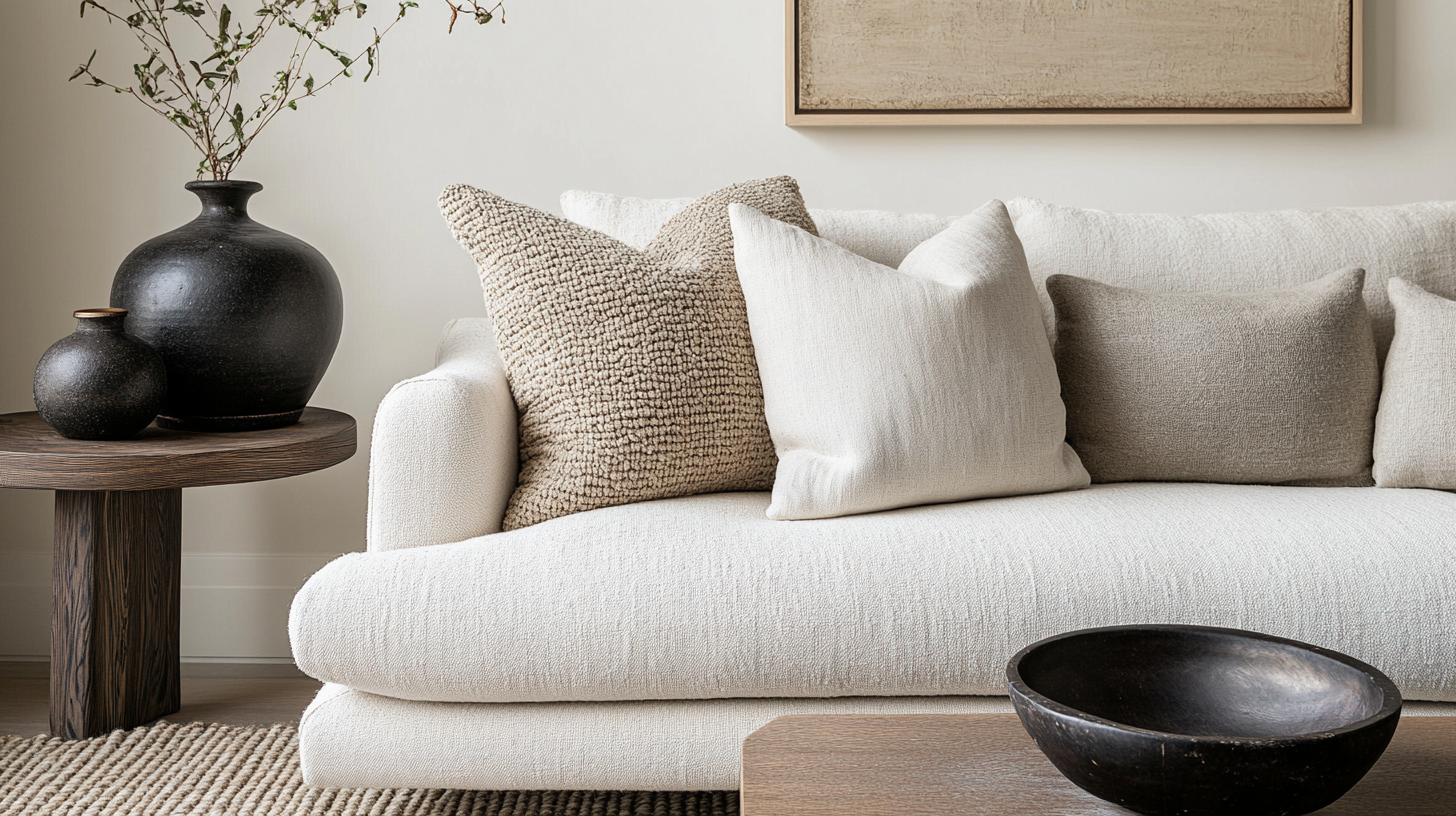
The first thing every expensive-looking room needs is something that gives the space weight, warmth, and natural texture.
This is what I call the organic-textured anchor.
It is usually one of these:
A linen sofa
A wood coffee table
A woven rug
A stone side table
A rattan chair
A travertine lamp
A large ceramic vase
A natural oak console
A textured media cabinet
This piece gives the room a foundation. Without it, the space can feel flat, cold, or overly decorated.
In the Arhaus vignettes, the anchor was almost always something natural: wood, stone, woven fiber, linen, leather, or ceramic. That is what keeps the room from feeling too perfect.
A beautiful room needs a little tension. The organic anchor gives the room texture and imperfection, which makes everything feel more collected and less showroom-staged.
Shop organic-textured anchors: woven rug, wood coffee table, travertine table, linen sofa.
2. Add a Soft Contrast Layer
Once the anchor is in place, the room needs softness. This is where most people either stop too early or overdo it. A soft contrast layer is what makes the room feel inviting instead of just styled.
This could be:
Cream pillows on a darker sofa
A boucle accent chair next to a wood table
A soft wool rug under structured furniture
Linen curtains against clean walls
A muted throw blanket over a leather chair
A warm neutral lamp shade on a dark table
The goal is not to make everything match. The goal is to create contrast without creating visual noise.
In expensive-looking rooms, the contrast usually feels quiet. It is not harsh black-and-white contrast. It is softer than that.
Think:
Cream against oak
Linen against leather
Boucle against stone
Warm white against walnut
Textured beige against dark metal
This is what makes the room feel layered.
A room where everything is the same tone can feel unfinished. A room with too much contrast can feel busy. The sweet spot is soft contrast — enough difference to make the eye move, but not so much that the room feels chaotic.
Shop soft contrast layers: boucle pillows, linen curtains, neutral throw.

3. Finish With a Dark Grounding Accent
This is the part most people skip.
A room can have beautiful neutrals, expensive furniture, and great texture — but still feel like something is missing.
Usually, what is missing is a grounding accent.
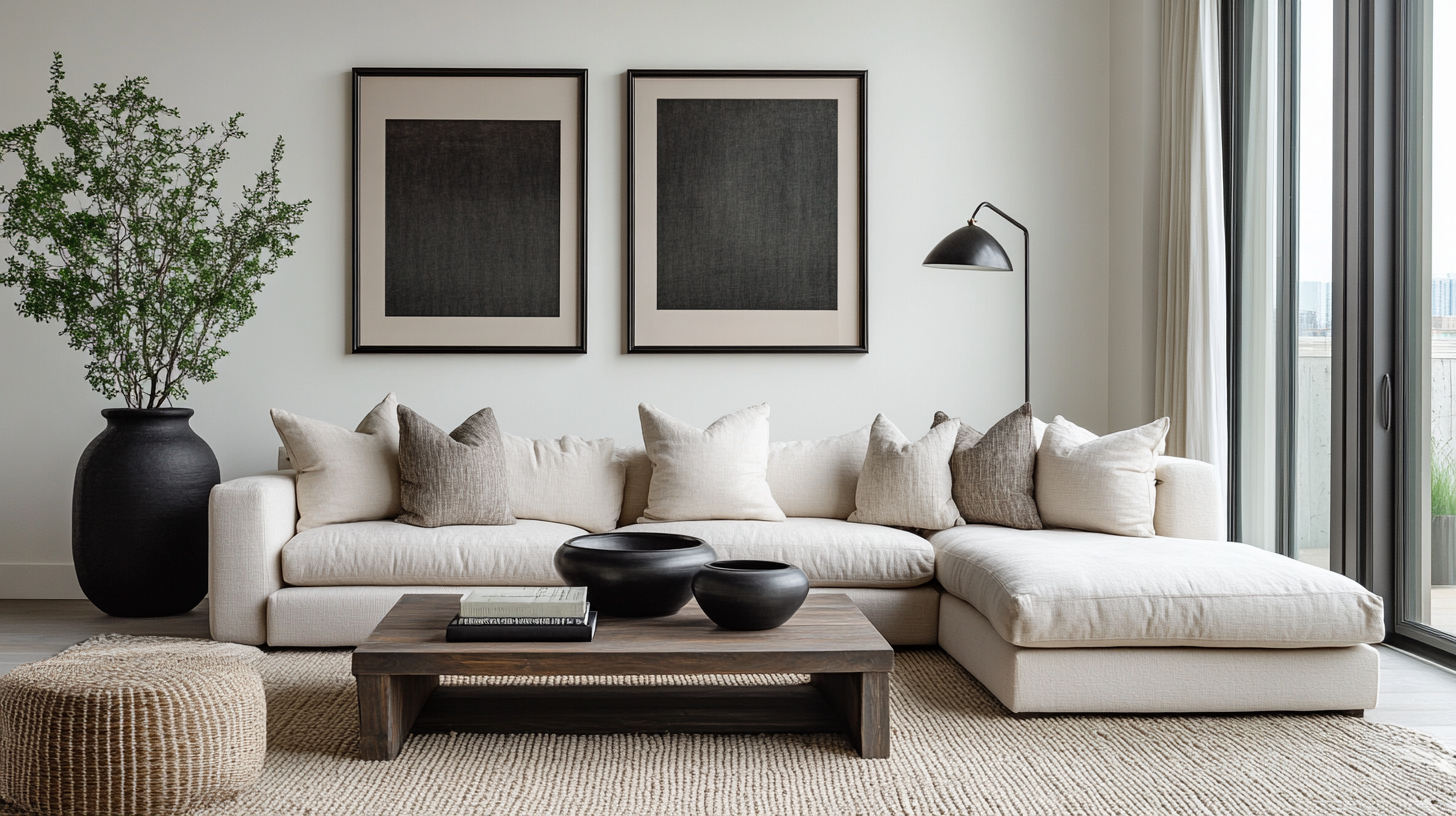
A dark grounding accent gives the room visual weight. It keeps everything from floating.
This could be:
A black metal floor lamp
A dark wood side table
A charcoal accent pillow
A bronze picture frame
A black marble tray
A dark ceramic vase
A deep brown leather ottoman
A black or aged brass cabinet pull
A dark-framed mirror
The key is restraint.
You do not need a lot of dark pieces. In fact, too many can make the room feel heavy.
You just need one to three moments that visually anchor the space.
In an Arhaus-style room, the dark accent often shows up in lighting, table legs, picture frames, hardware, or accessories. It is not always the main character, but it makes the entire room feel more intentional.
Shop dark grounding accents: black floor lamp, bronze frames, dark ceramic vases, black marble tray.
Why This Formula Works
This formula works because it balances three design principles:
Texture makes a room feel warm.
Contrast makes a room feel layered.
Grounding makes a room feel finished.
When all three are present, the room feels intentional even if the individual pieces are simple.
That is why you can create an elevated living room without buying every item from a high-end showroom.
You can splurge on one anchor piece and save on the supporting layers.
For example:
Splurge on the coffee table, save on the pillows
Splurge on the rug, save on the styling accessories
Splurge on the sofa, save on the side tables
Splurge on the lighting, save on the decorative objects
The formula matters more than the price tag.

How to Use This Formula in Your Own Living Room
Start by looking at your room and asking three questions:
1. What is my organic-textured anchor?
Look for the piece that brings in natural material or texture.
If you do not have one, start there. A flat room usually needs texture before it needs more decor.
2. Where is my soft contrast?
Look for moments where your room has variation.
If everything is beige, add texture.
If everything is smooth, add something woven or nubby.
If everything is light, add a slightly deeper tone.
3. What is grounding the room?
Look for one darker element that creates weight.
This does not need to be black. It can be dark brown, charcoal, bronze, walnut, espresso, or aged metal.

Designer Tip: Do Not Buy More Decor Before Fixing the Formula
If your room feels unfinished, it is tempting to buy more accessories.
But more decor will not solve a room that is missing structure.
Before you add another vase, pillow, or tray, check whether your room has:
A textured anchor
A soft contrast layer
A grounding accent
If one of those is missing, that is where to focus first.

Shop the Look
Here are the types of pieces I would look for if you want an Arhaus-inspired, elevated living room without buying everything from Arhaus:
Organic Anchors
Soft Layers
Dark Grounding Accents
Final Thought
An expensive-looking living room is usually not about having more. It is about having the right balance.
When you combine an organic-textured anchor, a soft contrast layer, and a dark grounding accent, the room starts to feel finished, elevated, and intentional.
That is the formula I kept seeing at Arhaus. And it is one you can absolutely use in your own home.
Before you add more decor, make sure your room actually has a plan.
If your living room feels unfinished and you cannot figure out why, my free Living Room Reset Guide walks you through the layout, scale, and styling mistakes that make a room feel “off.”
Download the free guide here and start with the part of your room that matters most.
